What is deep work? A practical guide for students

TL;DR:
- Deep work is focused, distraction-free activity that pushes your cognitive abilities and creates valuable outcomes. It requires consistent sessions of 60 to 90 minutes and benefits from a proper schedule, like daily routines or blocking focused periods. Reducing digital distractions and batching shallow tasks enhance your capacity for deep work and improve learning and productivity.
Deep work is defined as professional activity performed in a state of distraction-free concentration that pushes your cognitive capabilities to their limit. Cal Newport coined the term, and the framework has only grown more relevant as AI tools and fragmented digital habits make sustained focus harder to maintain. The three pillars of deep work are a distraction-free environment, high cognitive demand, and output that is difficult to replicate. Master these and you produce better essays, sharper analysis, and skills that compound over time.
What is deep work vs shallow work?
Deep work is defined as cognitively demanding activity performed without distraction, producing high-value output. Think drafting a 3,000-word PSYC101 literature review, working through a complex calculus problem set, or writing a strategic business proposal from scratch. These tasks push your thinking to its edge and produce something genuinely hard to replicate.
Shallow work sits at the other end. Replying to Canvas messages, reformatting a reference list, booking a tute room, or scrolling through unit announcements are all necessary but require active management so they don’t crowd out focused time. Shallow work keeps things running. It does not build your skills or produce your best output.
| Feature | Deep work | Shallow work |
|---|---|---|
| Cognitive demand | High | Low to moderate |
| Distraction tolerance | Zero | Moderate |
| Typical tasks | Essay drafting, analysis, coding | Emails, admin, scheduling |
| Skill growth | Significant | Minimal |
| Output value | Hard to replicate | Easily replicated |
The distinction matters because both types of work compete for the same hours. Without a clear boundary, shallow tasks expand to fill your day.
How does deep work affect brain function and learning?
Focused work physically rewires your brain. Myelin production increases under sustained concentration, which speeds up and strengthens the neural circuits you are using. That is why practising a skill deeply, rather than passively reviewing it, produces faster and more durable learning.

Distraction breaks this process. Every time you switch tasks or check your phone mid-session, you interrupt the neural pathway your brain is building. The cost is not just the seconds lost. It is the re-entry time and the degraded quality of the work you produce when you return.
Deep work sessions ideally run for 60–90 minutes of uninterrupted concentration. Shorter blocks can work for lighter tasks, but for complex writing or analysis the refocus cost after each interruption is too high to make short sprints worthwhile.
Pro Tip: Set a single, specific goal before each session. “Write the argument section of my LAWS2001 essay” beats “work on my essay.” A clear target activates the right neural circuits from the first minute.
What scheduling philosophies support deep work?
Four scheduling styles exist for building deep work into your routine: Monastic, Bimodal, Rhythmic, and Journalistic. Each suits a different lifestyle.
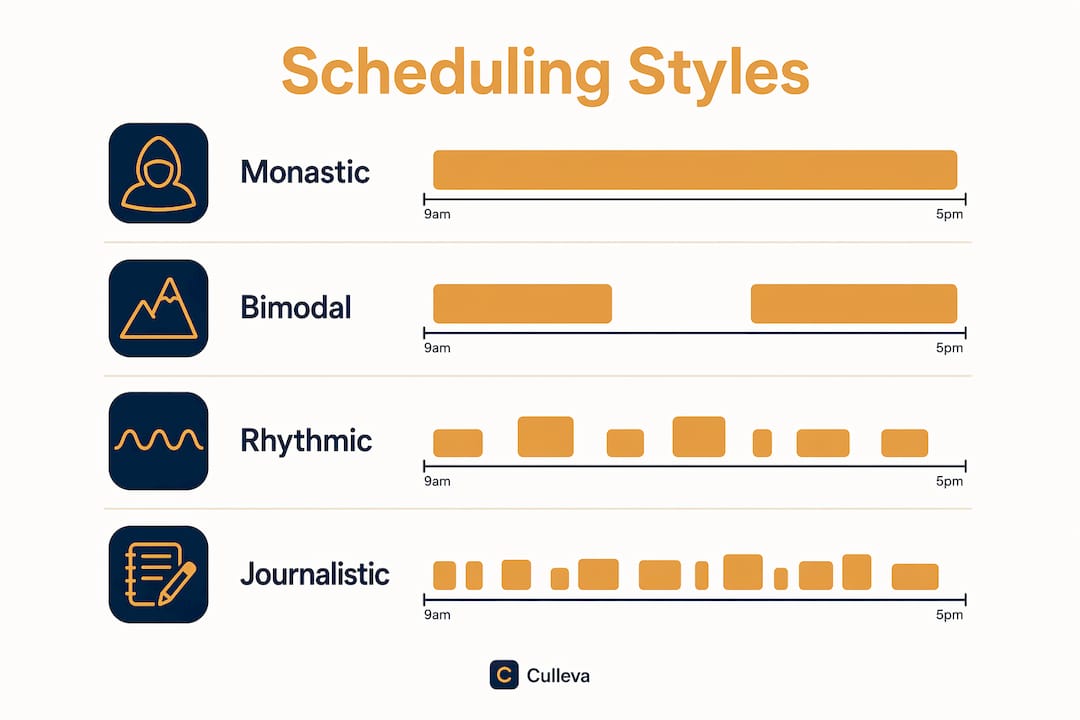
Monastic means eliminating almost all shallow obligations to focus entirely on deep work. This works for researchers or writers with very few external commitments. It is not realistic for most students juggling multiple units, group assignments, and part-time jobs.
Bimodal splits your time into deep and shallow periods across days or weeks. You might dedicate Monday and Tuesday to focused study and keep the rest of the week for admin and social commitments. It requires significant schedule control.
Rhythmic is the most practical for students and professionals. You block the same time each day for focused work, typically early mornings before lectures or the first two hours after breakfast. Consistency builds the habit automatically. You stop negotiating with yourself each morning about whether to start.
Journalistic means fitting deep work into whatever gaps appear in your day. It sounds flexible but demands strong mental discipline to switch into focus mode on short notice. Most students find it unreliable until they have already built a solid focus habit.
| Style | Best for | Main challenge |
|---|---|---|
| Monastic | Researchers, writers | Unrealistic for most students |
| Bimodal | Professionals with schedule control | Requires blocking full days |
| Rhythmic | Students, most professionals | Needs consistent daily routine |
| Journalistic | Experienced practitioners | Hard to switch focus on demand |
Pro Tip: Start with Rhythmic. Block 8:00–10:00 AM as your deep work window for one week. Treat it like a lecture you cannot skip. After seven days, the habit starts to feel automatic.
Check assignment deadline management strategies to see how scheduling philosophies map onto real uni deadlines.
How do you reduce distractions and protect focus time?
Digital distractions are the main threat to focused work in 2026. Frequent fragmented digital use erodes your brain’s ability to tolerate boredom and sustain attention. Treating social media like junk food, consuming it only at set times, rebuilds your baseline capacity to concentrate.
Batching shallow work is equally important. Instead of answering Canvas messages as they arrive, schedule a 20-minute block at noon and another at 5:00 PM. This protects your morning focus window and trains your brain to stop expecting constant input.
Breaks matter too, but the wrong kind of break makes things worse. Phone use during breaks counts as a semi-distraction and lowers your recovery and focus capacity for the next session. A short walk, stretching, or sitting quietly does far more to restore your prefrontal cortex than scrolling Instagram.
Here is a practical distraction-reduction sequence:
- Turn off all notifications before your session starts. Aeroplane mode works.
- Set a visible timer for your session length (60–90 minutes).
- Write your single session goal on paper before you open your laptop.
- Schedule two shallow work blocks per day and stick to them.
- Use screen-free rest during breaks: walk, stretch, or sit outside.
- Review what distracted you after each session and adjust tomorrow’s setup.
Pro Tip: If you catch yourself reaching for your phone mid-session, write down what you were about to check. You will almost always find it was not urgent. The urge passes within 90 seconds.
How to apply deep work to uni study and professional projects
Applying focused work principles to your actual uni schedule takes a bit of setup, but it pays off fast. Start by balancing your subject workload so you know which units need the most deep work time each week. A unit like LAWS3001 with a 4,000-word essay due in Week 10 needs more protected focus time than a unit with weekly short quizzes.
For essay drafting and analysis tasks, extend your Pomodoro intervals to 40 minutes or longer. Standard 25-minute blocks interrupt your mental momentum right when you hit your stride. Longer sessions protect that momentum and produce noticeably better first drafts.
Set a clear goal for each session before you sit down. “Draft the methodology section” is a usable goal. “Work on my research project” is not. Pair this with a defined endpoint so you finish with a sense of completion rather than trailing off.
- Block your deep work window in your calendar as a recurring event.
- Set up your physical environment: close unnecessary tabs, use headphones, face away from foot traffic.
- Define one clear deliverable per session before you open your laptop.
- Protect at least one “No Meetings” or “No Group Chat” morning per week.
- Track your sessions using study progress tracking to see patterns in your focus over time.
- Accept that shallow work still needs doing. Batch it into dedicated slots rather than eliminating it.
The goal is not to work more hours. It is to make your focused hours count.
Key takeaways
Deep work produces high-value, hard-to-replicate output because it triggers myelin production and neural rewiring that shallow, distracted work cannot achieve.
| Point | Details |
|---|---|
| Deep work definition | Distraction-free, cognitively demanding activity that pushes your mental limits and produces valuable output. |
| Rhythmic scheduling | Daily consistent focus blocks, such as 8:00–10:00 AM, build reliable habits for students and professionals. |
| Session length | Aim for 60–90 minute uninterrupted sessions; extend Pomodoro blocks to 40+ minutes for complex tasks. |
| Distraction management | Batch shallow work, use screen-free breaks, and treat social media as a scheduled activity, not a default. |
| Practical application | Set one clear goal per session, protect a daily focus window, and track progress to improve over time. |
Culleva helps you protect your focus time
Getting serious about focused study means sorting out the logistical chaos first. When you are not sure what is due, which unit needs the most attention, or where your group project files are, shallow tasks eat your whole day.
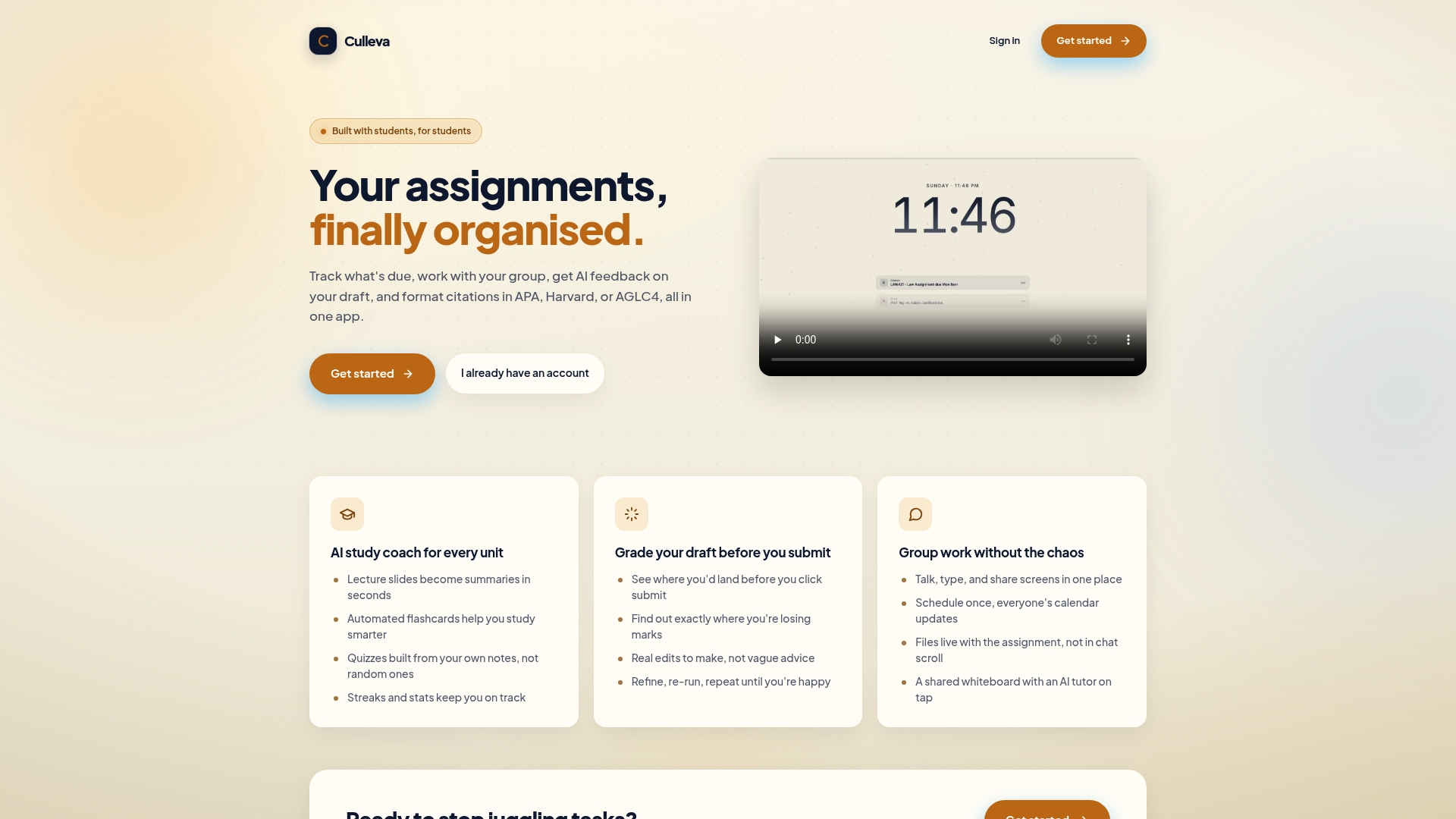
Culleva is built for exactly this. It tracks your assignments and deadlines, auto-generates flashcards and summaries from your lecture slides, and estimates your likely mark before you submit so you can fix the gaps. The group-work hub keeps voice chat, shared files, and a collaborative whiteboard in one place, so you stop losing time to coordination. When your logistics are handled, your deep work sessions actually happen. Get started with Culleva and give your focus time a real chance.
FAQ
What is the deep work definition in simple terms?
Deep work is focused, distraction-free activity on cognitively demanding tasks that produces high-value output. Cal Newport defines it as work that pushes your cognitive capabilities to their limit.
How long should a deep work session be?
Sessions ideally run for 60–90 minutes of uninterrupted concentration. For complex tasks like essay drafting, extending focus blocks to 40 minutes or more protects mental momentum and reduces refocus costs.
What are examples of deep work for uni students?
Writing a literature review, solving a complex problem set, drafting a legal memo, or building a data analysis from scratch all qualify. These tasks require full attention and produce output that is genuinely hard to replicate.
How is deep work different from focused work?
The terms overlap, but deep work specifically refers to Cal Newport’s framework: cognitively demanding, distraction-free activity producing rare and valuable output. Focused work is a broader term for any concentrated effort, regardless of cognitive demand.
How do you start practising deep work if you have never tried it?
Pick the Rhythmic scheduling style and block the same 60-minute window each morning for one week. Set one clear goal per session, turn off notifications, and use screen-free rest during breaks to recover properly between sessions.
Recommended
Stay on top of every assignment
Culleva brings your assignments, group work, calendar, and an AI study coach into one place. Free to start.